Weather or Not

Severe Outflow by R. Edwards

  • Home
  • About
  • Archives

Powered by Genesis

Wartime in the Era of Social Media: Watch What You Share!

February 24, 2022 by tornado Leave a Comment

As you’ve likely heard by now, Russian forces have entered Ukraine. One nation’s invading a much smaller, less-powerful neighbor is nothing new historically; it’s happened countless many times. But it is new to the cell-phones/social-media/fake-image era.

Real and bogus images and videos will abound, flooding the internet from true reporters, propaganda bots, and well-meaning but ignorant Uncle Bubbas. Without first-hand knowledge of the situation, you are unlikely to know, with absolute certainty, which is which. You also are likely to overestimate your own ability to judge what is authentic.

This message below is nonpartisan, wise advice right now for all: self-discipline and restraint.

Don’t share emotionally manipulative war images and stories without independent verification — preferably from multiple credible media sources. [Mainline media has been caught sharing fake images hastily before.] Even then, choose prudence over impulse, and wait awhile.

It’s easier for most humans to react with reflexive emotion than self-discipline, restraint, analysis, logic, and reason. We meteorologists have seen this ad nauseam with frequent sharing of old, misdated, manipulated and/or outright fake storm images. Far more is at stake here than some old or fake storm image passed off as yesterday’s event!

War images (real, fake or old) will be shared widely without verifying authenticity — sometimes even by “credible” but duped media. For the sake of all, don’t be the fooled fool.

And for those thirsting for some formally published science on the issue of sharing fake, manipulated and/or misleading imagery, here you go. It really does cause social and psychological damage!
Filed Under: Not weather Tagged With: fakery, media, media ethics, media mistakes, photo fakery, photography, photography ethics, propaganda, self-restraint, social media, war

Epic Failings in Recent Weather Media

April 21, 2011 by tornado Leave a Comment

Tonight we examine recent failures in journalistic coverage of meteorology.

EXHIBIT A: A story, written by Mitch Weiss of A.P., has been making the usual wire-service rounds regarding the tornadoes in North Carolina a few days ago. In every case I’ve seen so far (out of about 30), the headline was some variant of the most common one: Killer storm system caught N.C. by surprise. Wrong! Wrong! Wrong! Get your facts straight!

The truth: this event was well-warned and well-forecast! Not only were all but one of the tornadoes in advanced warnings, the area had been highlighted in some form of official severe weather outlook for days prior, culminating that morning with a highly uncommon “HIGH” risk at 1630Z, driven by the extreme probabilities for tornadoes. A “Particularly Dangerous Situation” tornado watch was issued before the first tornado. Fortunately, author and private meteorologist Mike Smith, followed by the Washington Post weather BLOG, stepped forward to set the record right. They shouldn’t have had to. Better knowledge and awareness on the part of the reporter would have saved others’ time and his own credibility.

EXHIBIT B: The ongoing Texas wildfires and their contributing drought are insanely destructive, the blazes having torched over a million acres so far this year. That definitely deserves media attention, not just in the USA but worldwide. This photographically stunning story from the (London) Daily Mail is an important one; but it is disappointing to see the British media getting as sloppy as American news outlets with poor writing technique, factual errors, overgeneralizations, and misspellings. One would be tempted to credit the English for mastery of English. Apparently, that’s a fallacious assumption.

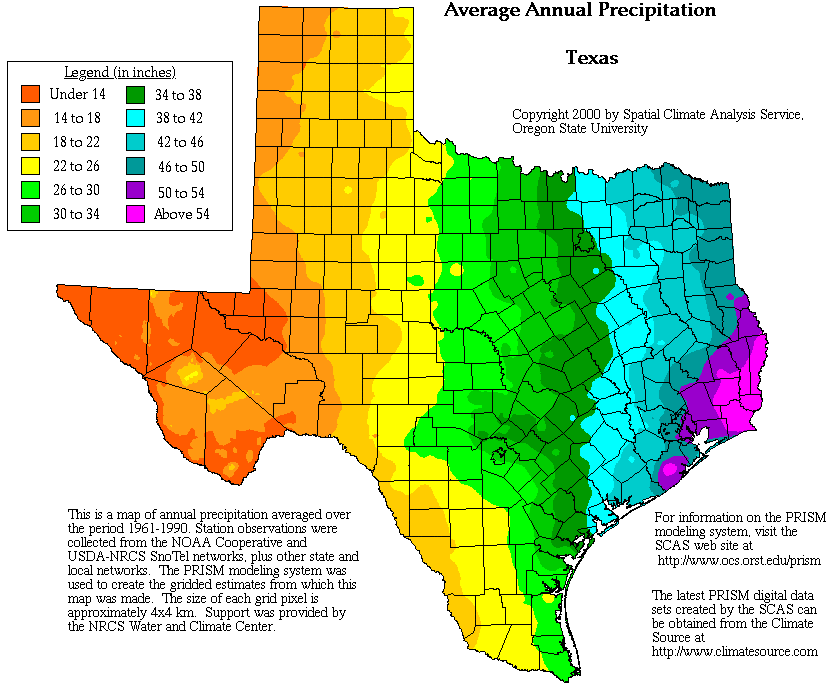
I could nitpick or even cavil over a non-trivial quantity of flaws in that piece. Instead, I’ll go after one particularly head-turning whopper: “Texas usually receives up to 15 inches of rain a year…”, as if it were a point location instead of a land area extending over 600 miles in different directions. Get your facts straight! The reality is that average annual rainfall in Texas ranges from over 50 inches in the Golden Triangle area of the southeast to less than 14 over most of the Trans-Pecos and far west. Indeed, far more of the state averages above than below 15.

EXHIBIT C: Finally, this story, “Are We Getting Better at Predicting Tornadoes?” by Matthew Philips of Freakonomics, is a steaming heap of pseudo-journalistic dog dung. The best I can say is that the intent is noble; from there, the story festers with malodor.

First, the headline asks a question that long ago has been answered with a resoundingly loud “Yes” that screams forth in booming echoes across every square millimeter of this land. What kind of skill is there in being the town crier of the obvious? I would expect their next headline to be, “Is the Sunrise Somewhere in the Eastern Sky?”

Next, the story violates a basic ethical tenet by using a blatantly bogus, altered “photograph” apparently supplied by some outfit called “iStockphoto”. Someone quite obviously took this actual tornado photo from 1981 in Oklahoma, changed its coloration, flipped it horizontally, and pasted it onto a different foreground and background. That is grossly deceptive and unethical image manipulation! Even if Freakonomics didn’t know they were being given a bogus tornado image by iStockphoto, they should have known. It’s called verifying your sources. That’s Journalism 101.

[There goes iStockphoto’s credibility too, while we’re at it.]

Proceed into the text. Glossing through the hackneyed old clash-of-airmasses oversimplification, using a “blend of arctic and tropical air currents” to explain tornadoes, emits screaming warnings that this story is rolling around the bowl and down the hole, right from the outset.

They mention dual-polarization of Doppler radars as “specifically designed to improve tornado spotting”. Get your facts straight! That’s a load of contrived rubbish on two fronts:

  1. Dual-polarization technology actually is aimed at better identification of various forms of precipitation in storms, as well as airborne biological targets such as birds.
  2. Tornado spotting is done with human eyeballs, not radar.

At best, dual-polarized radar will aid in ascertaining lofted debris, assuming the tornado is raising detectable debris high and wide enough to be sampled. Unfortunately, by then the tornado is ongoing, and the radar-based warning for it becomes a projection and not a true forecast.

Lastly, we encounter another made-up whopper: “The current master of tornado prediction is Dr. Greg Forbes of the Weather Channel, whose recently developed Tornado Condition Index system, or TOR:CON, is widely seen as the most accurate at the moment.” By whom, exactly? Not in the atmospheric science community, it isn’t. Hey, I know Greg. I like Greg. He’s a very smart guy and is respected in the field. But “TOR:CON” hasn’t seen a sniff of formal, scientific peer review (nor has Henry Margusity’s differently aimed “TS Scale” for tornadoes, mentioned earlier).

By contrast, such statistically established indices as the Energy-Helicity Index and Significant Tornado Parameter have (e.g., scroll down to begin at pp. 1255-1259 in this formal journal paper). I doubt Greg himself would be very comfortable with being called the “master of tornado prediction” either. Such a person probably doesn’t exist, even if it were possible to devise a consistent and objective basis to assign that title. Who is qualified to crown anyone as “master of tornado prediction”? Absolutely, positively not the writer of this story!

Finally, the addendum appears: “Post has been amended to remove mention of meteorologist Kevin Martin”. Why? Could it be some backtracking after discovering stuff like this? Inquiring minds want to know.

After reading those stories, I feel the strong need to take a shower and scrub off all the grime. Where can we instead find consistently true, representative and reliable media coverage of weather stories?

Filed Under: Weather Tagged With: Associated Press, Daily Mail, fire weather, Freakonomics, media, North Carolina, North Carolina tornadoes, outlooks, photo fakery, science media, tornadoes Norh Carolina, warnings, watches, weather media, wildfires

Search

Recent Posts

  • Token Participation for a Check Box
  • Public Access to Public Land
  • Independent Review Needed for Weather Disasters and Warning Verification
  • Socialism vs. Communism
  • Critique of Some Weather AI Slop

Categories

  • Not weather
  • Photographic Adventures
  • Scattershooting
  • Weather
  • Weather AND Not

Blogroll

  • CanadianTexan
  • Chuck's Chatter
  • Cliff Mass Weather & Climate
  • Digital Photography Review
  • DMN Dallas Cowboys BLOG
  • Dr. Cook's Blog
  • Dr. JimmyC
  • E-journal of Severe Storms Meteorology
  • Eloquent Science
  • Image of the Week
  • Jack's Cam Wall
  • Jim LaDue View
  • Laura Ingraham
  • MADWEATHER
  • Michelle Malkin
  • Photography Attorney
  • Severe Weather Notes
  • SkyPix by Roger Edwards
  • Tornatrix
  • With All My Mind

Meta

  • Log in
  • Entries feed
  • Comments feed
  • WordPress.org

Recent Posts

  • Token Participation for a Check Box
  • Public Access to Public Land
  • Independent Review Needed for Weather Disasters and Warning Verification
  • Socialism vs. Communism
  • Critique of Some Weather AI Slop

Categories

  • Not weather
  • Photographic Adventures
  • Scattershooting
  • Weather
  • Weather AND Not

Archives

Blogroll

  • CanadianTexan
  • Chuck's Chatter
  • Cliff Mass Weather & Climate
  • Digital Photography Review
  • DMN Dallas Cowboys BLOG
  • Dr. Cook's Blog
  • Dr. JimmyC
  • E-journal of Severe Storms Meteorology
  • Eloquent Science
  • Image of the Week
  • Jack's Cam Wall
  • Jim LaDue View
  • Laura Ingraham
  • MADWEATHER
  • Michelle Malkin
  • Photography Attorney
  • Severe Weather Notes
  • SkyPix by Roger Edwards
  • Tornatrix
  • With All My Mind

Meta

  • Log in
  • Entries feed
  • Comments feed
  • WordPress.org